
Parking Lot Preservationists
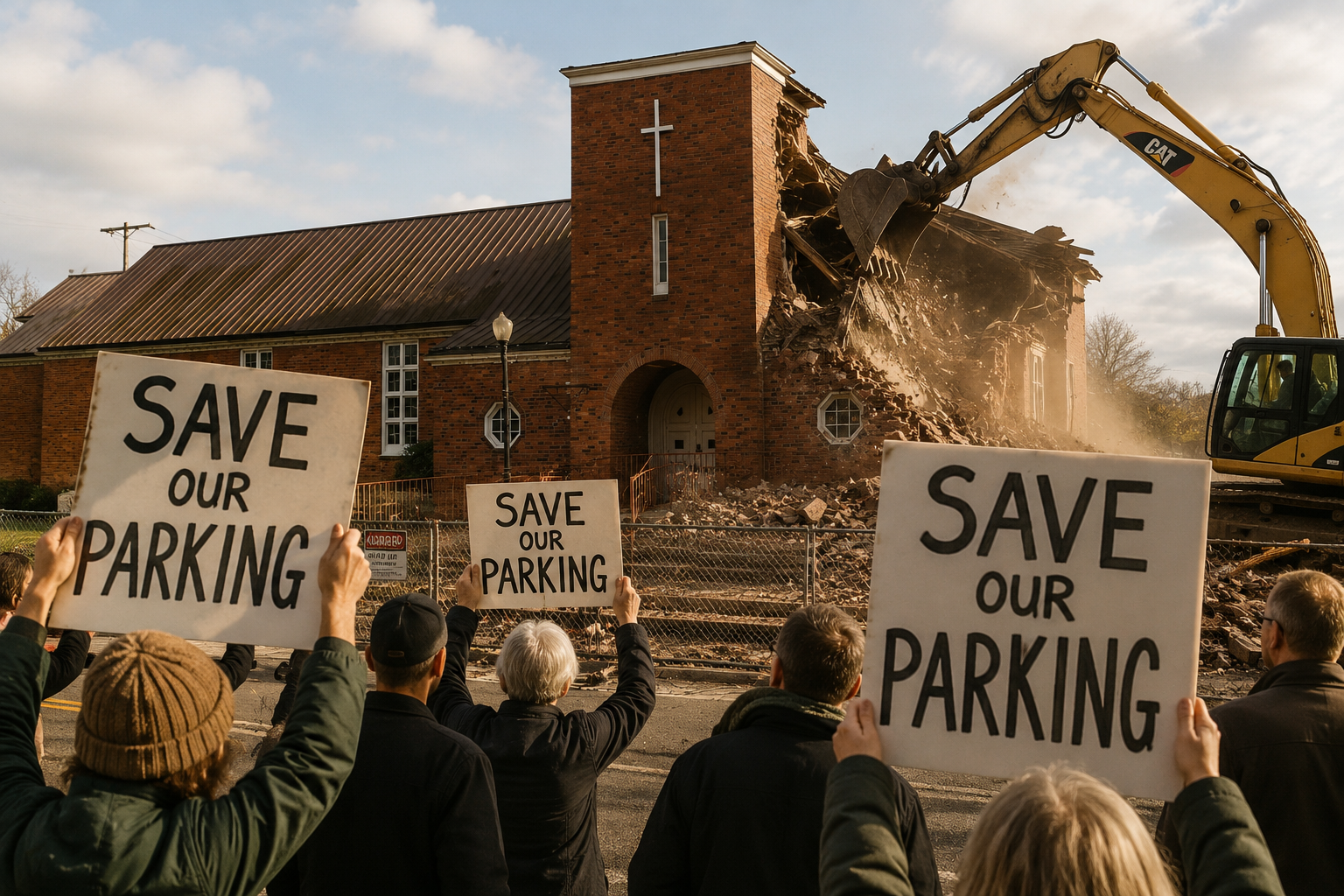
The irony is palpable
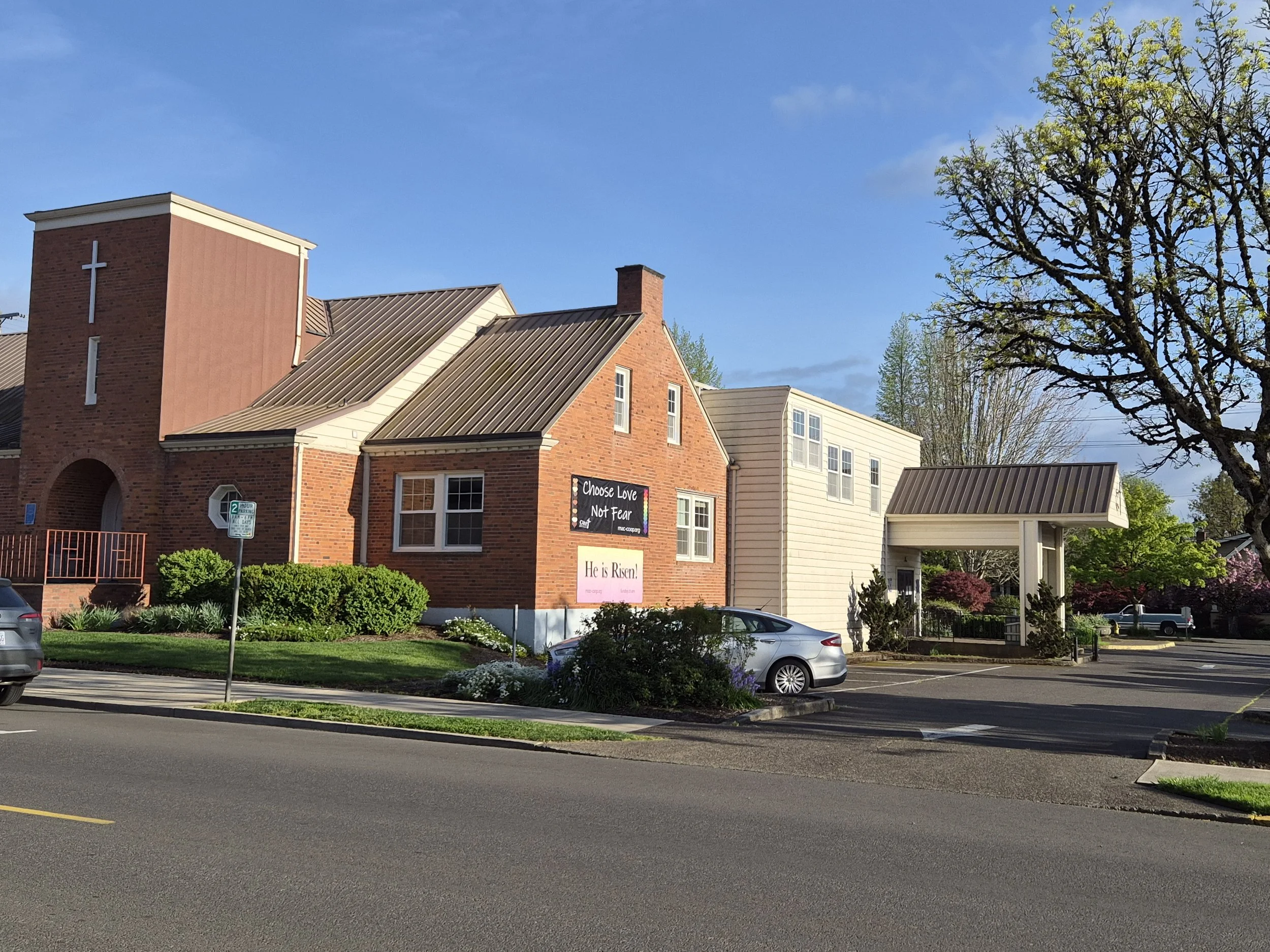
(The Historic Brick Church with addition in the background)
To: McMinnville Planning Commission
From: Quinn Millegan, PO Box 1610, McMinnville, Oregon 97128
Date: July 7, 2026
Re: Opposition to Appeal AP 4-26 (DDR 1-26): Legal & Procedural Obsolescence of the Appellant’s Claims
Commissioners,
I am submitting this testimony to formally oppose the only appeal (File No. AP 4-26) filed by the McClains regarding the Downtown Design Review (DDR 1-26) for the affordable housing development at 544 NE 2nd Street.
The appeal attempts to use community ties to justify this opposition, noting residency downtown for "over nine years". For context, I have lived on 2nd Street—less than a block from this proposed building—for a decade. My family’s roots here go much deeper: my father, JW, grew up in McMinnville; my grandmother was an English teacher and swim instructor to many in this town; and my grandfather actually served as a diaconal minister at this Historic Methodist church in question.
From this perspective of multi-generational investment in our community, I can say with absolute certainty: not only have parking studies proven that downtown Mac has more than enough parking, but modern planning has found that mandating parking minimums above what would organically be built is actively bad for downtown economic activity and city finances. Parking is not an issue. Vibrant neighborhoods have limited parking. In order to nurture the dense, multi-use neighborhood that we have in downtown McMinnville, we must encourage dense residential units without parking. In fact, this neighborhood doesn't need more parking; it needs significantly less. I wish the applicant had used the full extent of reforms in state law which permits affordable housing with zero parking. It is a profound historical irony that the appeal argues for reversal simply for the loss of a surface parking lot—a lot that only exists because the church tragically demolished several historic structures decades ago just to pave it.
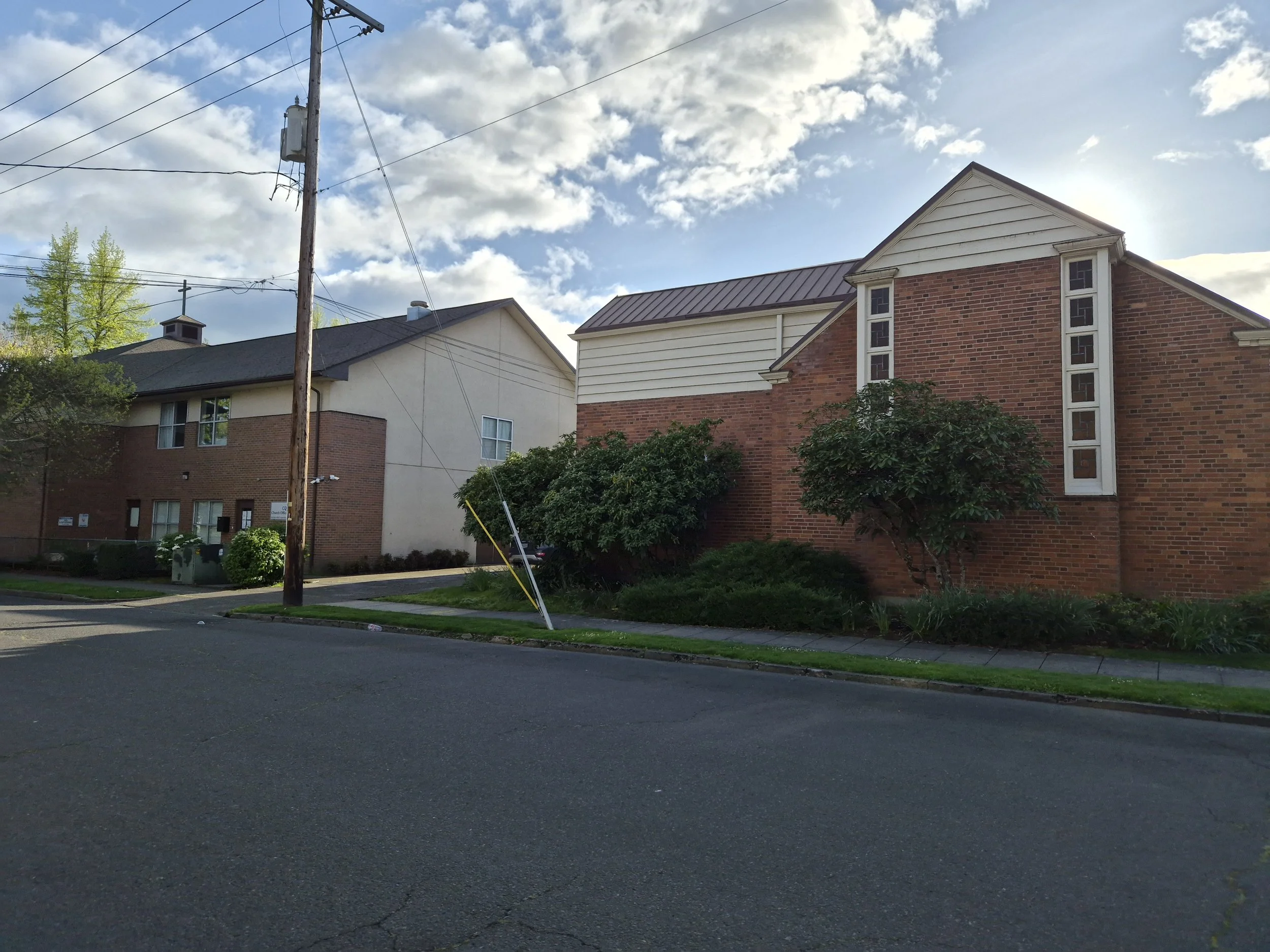
(Newer structure on the left & the Historic Church on the right)
Throughout the public process, we (the Millegan Family) have been some of the most vocal opponents of demolishing the historic Cooperative Ministries church. I previously submitted exhaustive financial and code analysis proving that the developer's claims of "financial hardship" were artificially inflated and that completely viable alternatives existed to save the building. I warned this City that allowing developers to bulldoze historic assets when reasonable alternatives existed would set a terrible precedent and hand a massive, discretionary legal lever to unreasonable and reactionary neighborhood opposition to new and much needed housing.
The appeal is the exact manifestation of that warning. However, the appellants have bungled this appeal so spectacularly that, legally, it must be voted down. The appeal is legally baseless under current Oregon state housing law, and tragically, due to a fatal procedural error of this appeal, the destruction of the historic church is now finalized.
Here is an exhaustive breakdown of why this appeal is legally dead on arrival:
The Procedural Blunder: The Finality of the Historic Demolition
The most glaring error in this appeal is procedural. The appellants explicitly state they are appealing the approval of DDR 1-26 (Downtown Design Review). They entirely failed to appeal the companion decision: HL 1-26 (Historic Demolition).
Because the demolition permit was not challenged before the June 18, 2026 deadline, the decision to demolish the historic church is now a finalized land-use decision. This appeal is clearly meant to utilize the one discretionary legal lever available to them, but it was aimed at the wrong target.
The preservation fight is over. The historic church is legally cleared for the wrecking ball. All that remains is a time-wasting administrative fight over design review that cannot legally win.
Appeal Ground 1: (Parking) is Legally Prohibited by State Law
In Ground 1, the appeal argues that the findings do not adequately address the loss of a "significant public parking resource" and complain about the addition of "70-140+ new residents" to the downtown core. The appeal claims the City failed to analyze how removing parking will affect downtown businesses and safety.
This argument is a relic of the past and is legally irrelevant. Under CFEC rules (specifically OAR 660-012-0430), local governments are strictly prohibited from mandating off-street parking for affordable housing developments. The City of McMinnville cannot legally deny, scale down, or financially burden this affordable housing project based on neighborhood parking anxieties.
The appeal complains that the findings treat parking as a mere "code-compliance issue". That is because, under state law, it is exclusively a code-compliance issue. The City has zero legal authority to demand a rigorous impact analysis on the loss of a private parking lease when the state explicitly exempts this exact type of housing from parking mandates.
Appeal Grounds 2 & 3: (Design Subjectivity) Violate ORS 197.307
In Grounds 2 and 3, the appeal attacks the "cumulative effect" of the design adjustments (such as glazing and materials) and complains about the "overall scale, massing, and visual impact" of a four-story, 72-unit apartment building. The appeal argues the project fails to align with the "historic character" and "unique sense of place" of downtown.
These subjective aesthetic complaints are nullified by Oregon state law. Under ORS 197.307 (Needed Housing), local governments must evaluate affordable housing using only "clear and objective" standards. The law aggressively protects affordable housing from this exact brand of neighborhood opposition, explicitly stating that local standards cannot be used to reduce density, create unreasonable costs, or cause unreasonable delays.
The City of McMinnville's decision to grant the requested design waivers and adjustments was required by state housing rules. The appeal’s demand to weaponize highly subjective, discretionary design guidelines (e.g., "visual prominence" and "sense of place") to block or shrink a 72-unit affordable housing complex is a direct violation of ORS 197.307. LUBA routinely throws out appeals that attempt to use subjective design criteria to halt needed housing.
Appeal Grounds 4: Insufficient Response to Public Testimony
The appeal’s final complaint is that the City did not "meaningfully engage" with the volume of public testimony regarding parking, infrastructure, and compatibility.
The City is not legally permitted to engage with those concerns on affordable housing projects. The volume of public outcry does not supersede state statutes. The City cannot prioritize subjective neighborhood petitions over the objective, statutory mandates of ORS 197.307 and the CFEC parking rules. The findings adequately dismissed these concerns because the concerns themselves hold no legal weight in the evaluation of an affordable housing application.
Note on the City Process: Confusing
To be fair to the appellants and those opposed to the demolition of the Historic Church, the City of McMinnville’s process was significantly convoluted, characterized by overlapping hearing dates, unclear appeal deadlines, and ambiguous guidance regarding which topics were open for debate. This lack of clarity hindered the ability of interested parties to engage effectively.
Furthermore, the combination of hearings for the demolition, the design review, and the church addition created a confusing set of circumstances. This complexity likely contributed to the failure to properly appeal the historic demolition, which remains the only error that could have been legally challenged.
Conclusion: A Lose-Lose-Lose Scenario
This appeal is entirely baseless and contradictory. While claiming the appeal is not opposition to affordable housing, the appeal has functionally launched a frivolous objection targeting the size, density, and parking of an affordable housing complex—arguments that are explicitly outlawed by the State of Oregon in order to protect and promote affordable housing.
Simultaneously, by failing to appeal the demolition permit, the destruction of the historic church they claim to value is now guaranteed. The church is lost, the affordable housing project is now needlessly delayed by a legally doomed appeal, and resources are being wasted on administrative battles rather than construction.
Because the DDR 1-26appeal relies entirely on criteria that are legally prohibited from being applied to affordable housing, I respectfully request that the Planning Commission reject Appeal AP 4-26 and allow the affordable housing project to proceed without further delay.
Sincerely,
Quinn Millegan, MsF
Managing Partner, Woodworth Contrarian Fund
Managing Director, Pegasus Equestrian International
Editor, Millegan Media
McMinnville Resident
Drew Millegan
Managing Partner, Woodworth Contrarian Fund
Managing Director, Pegasus Equestrian International
Editor, Millegan Media
McMinnville Resident
JW Millegan
Senior Equity Analyst, Woodworth Contrarian Fund
Land Use & Development Advisor, Pegasus Equestrian International
McMinnville Resident
And The Millegan Family
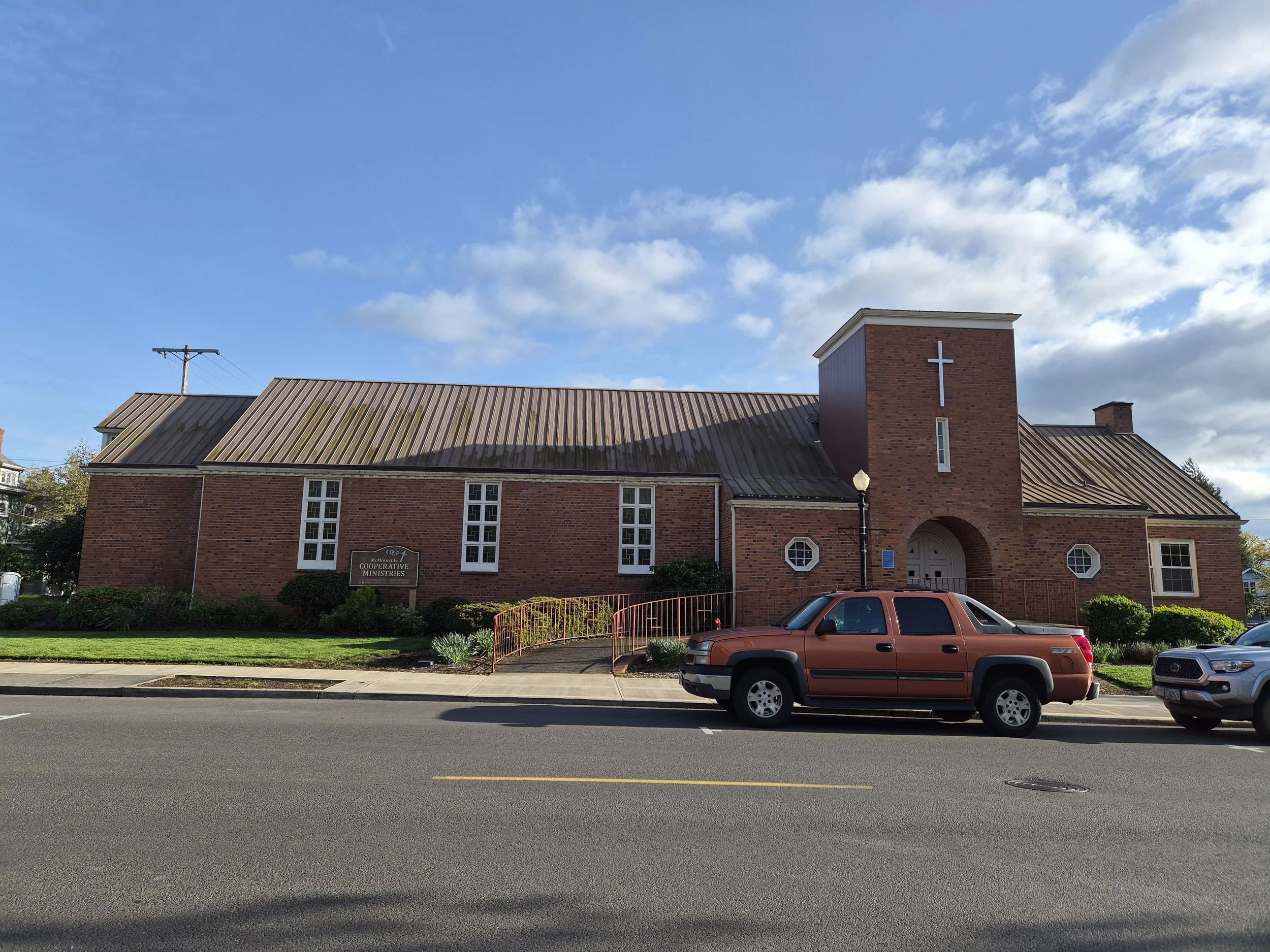
(The Historic Church facing 2nd Street McMinnville)

