
Parking Lot Preservationists: NIMBYs & their class war
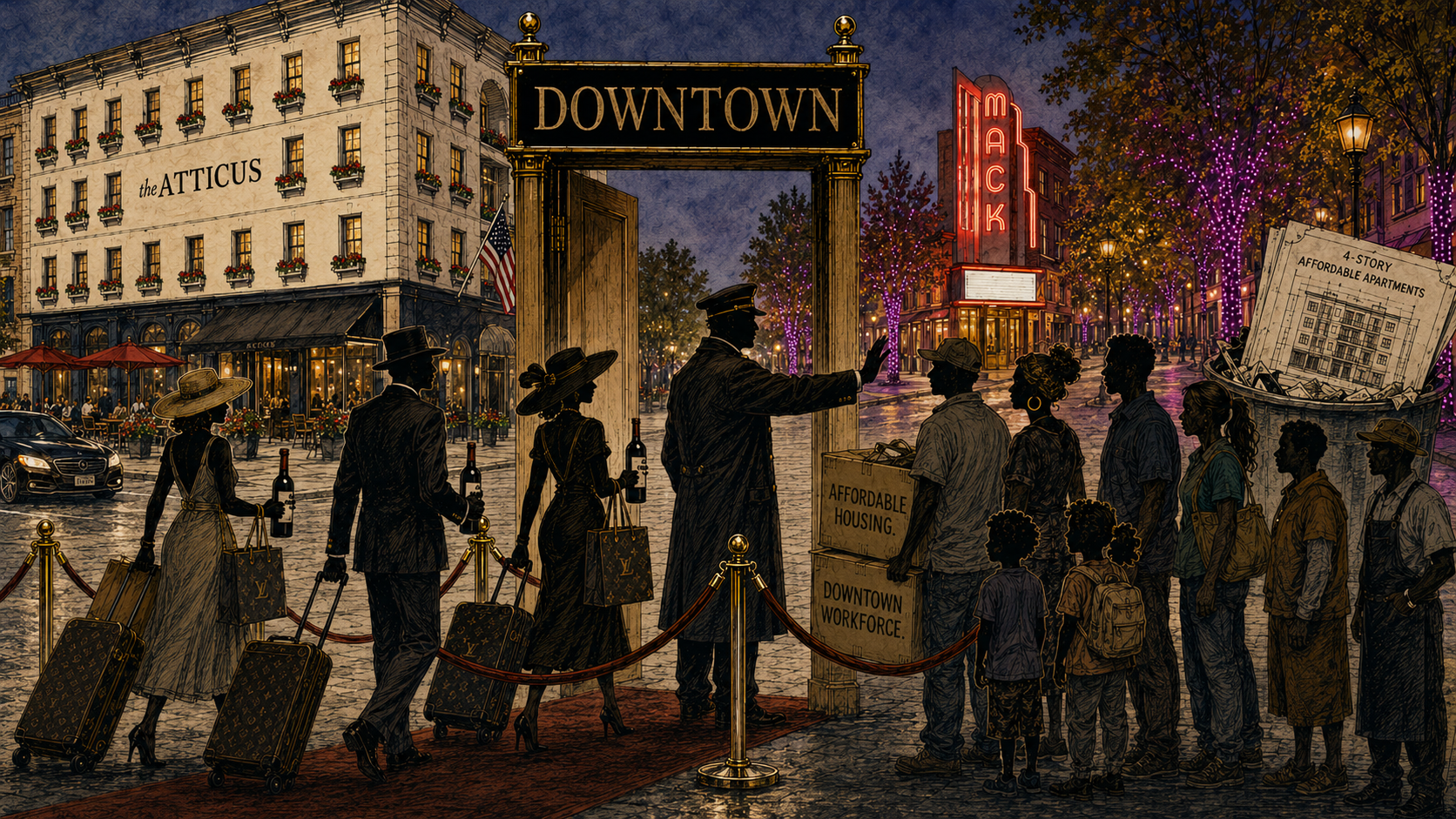
There comes a point in every land-use fight when the euphemisms stop working.
“We support affordable housing, but…”
But not four stories.
But not without a parking lot.
But not if it changes the “character” of downtown.
But not if the architecture offends someone.
But not here.
And, increasingly obviously, not these people.
That is what Appeals AP 4-26 and AP 5-26 have become: an increasingly desperate attempt to stop 72 units of affordable housing at 544 NE 2nd Street by throwing every obsolete code provision, parking complaint, aesthetic grievance, procedural theory and manufactured “safety” concern at City Hall and hoping something sticks.
It hasn’t.
The first appeal was denied unanimously by the McMinnville Planning Commission. Rather than accepting that result, the opponents simply appealed again, this time to the City Council.
The first appeal was legally baseless. The latest appeal somehow manages to be worse.
This appeal is being heard by McMinnville City Council on Tuesday, August 25th at 7 PM.
The “We Support Affordable Housing” Crowd Strikes Again
Alexa and Bryce McClain and Jeb Bladine have repeatedly wrapped their opposition in the obligatory disclaimer that they support affordable housing. Then they spend page after page trying to stop an affordable housing project.
That contradiction was obvious in the first appeal, which relied heavily on parking complaints, demands for accident studies and attempts to treat a property outside the 3rd Street Historic District as though it were inside it.
The second appeal continues the same exercise.
McMinnville does not have a shortage of people saying they support affordable housing in theory. It has a shortage of affordable housing.
And housing does not get built “in theory.”
It gets built on actual land, next to actual businesses, with actual neighbors who may have to occasionally see a building taller than two stories.
That is where the supposed support suddenly evaporates.
Apparently Four Stories Are Fine When Rich People Sleep There
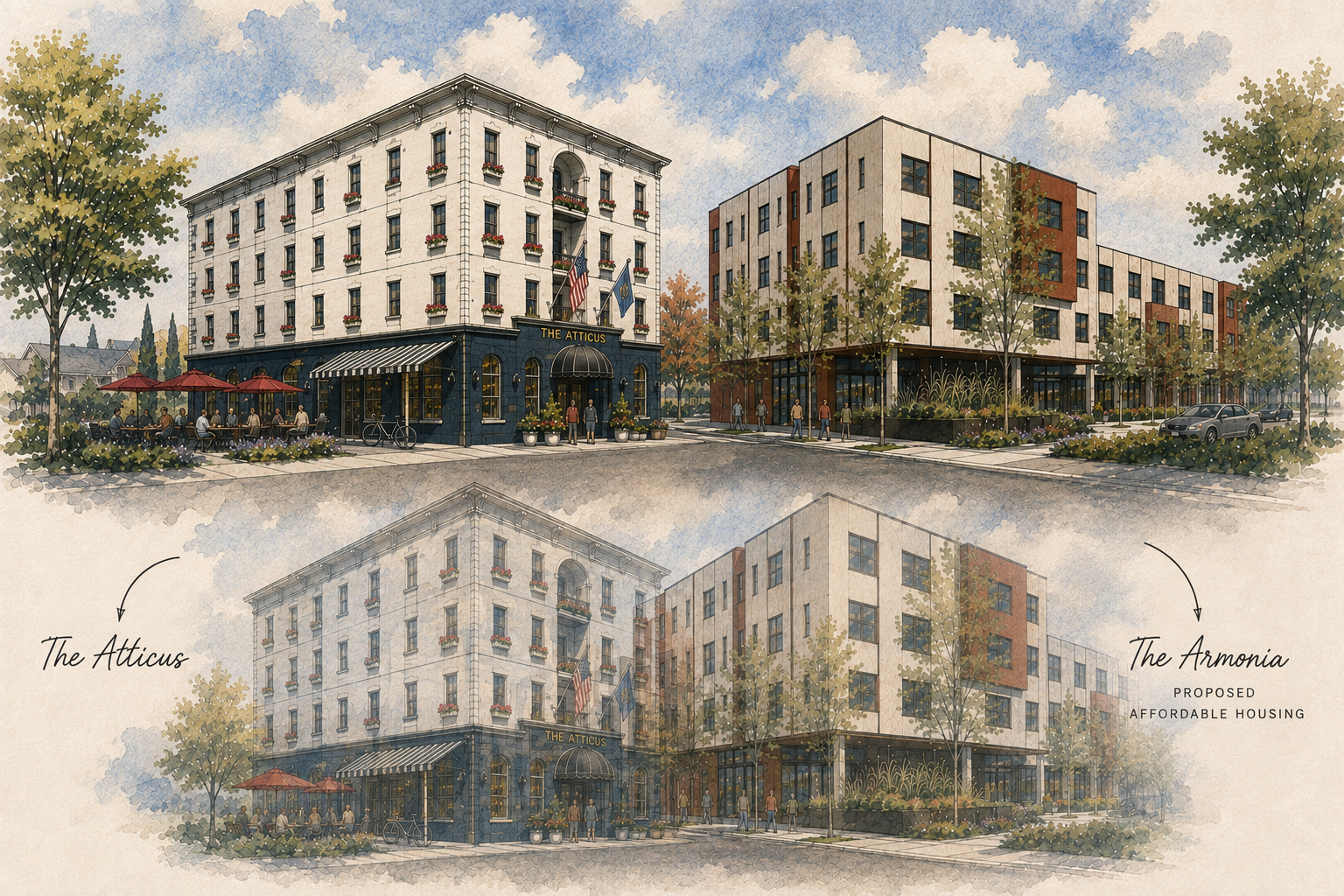
Jeb Bladine’s position is particularly remarkable.
As our August testimony points out, Bladine was an owner and developer of the Atticus Hotel: a four-story luxury hotel built inside the actual 3rd Street Downtown Historic District, with minimal off-street parking and rooms catering to well-heeled visitors.
And, get this, it was built on a parking lot. Apparently we didn’t need that one either.
Yet a four-story affordable housing development with reduced parking (still with more parking than the Atticus for what its worth), located outside the Historic District, suddenly presents an existential threat to downtown McMinnville.
What an extraordinary coincidence.
Four stories for tourists paying hundreds of dollars a night? Sophisticated downtown development.
Four stories for working-class families? Suddenly we need to talk about “massing,” “character,” parking, safety and the sanctity of downtown.
At some point, we should stop pretending this is an architectural disagreement.
It is a class disagreement.
The objection is not really to density. Bladine helped build density.
It is not really to four-story buildings. Bladine helped build one.
It is not really to minimal parking. His hotel has minimal parking.
And it certainly is not about protecting the 3rd Street Historic District, because the proposed housing project isn't in it.
The material difference is who gets to live inside the building.
It’s also ironic that Jeb Bladine opposed the Village Quarter affordable housing development on 3rd street nearly two decades ago for the same reasons - turns out they didn’t matter. The Village Quarter has reduced parking, initially charged $5/spot, and didn’t cause any issues with parking downtown. Because they charged that small amount, some residents decided they didn’t even need a car.
Jeb doesn’t even live in McMinnville. The story writes itself.
We live and work less than a block from the proposed development and fully support it.
“Those People Won’t Shop Here”
And then there is the most revealing language of all.
Someone involved in the broader opposition reportedly remarked:
“Those people won’t shop here.”
Those people.
If, as described, the reference was to the lower-income and disproportionately minority residents expected to occupy affordable housing, then congratulations: the subtext has become text.
That is what makes all the pearl-clutching about “downtown character” so difficult to take seriously.
Who exactly is downtown for?
People staying in $400-a-night hotel rooms?
Wine tourists?
Wealthy retirees?
Property owners?
Or does downtown McMinnville also belong to the dishwasher, the hotel housekeeper, the retail clerk, the agricultural worker, the young family and the senior living on a fixed income?
Because affordable housing means that some people without substantial wealth might actually get to live downtown, rather than driving in to pour wine, clean hotel rooms, cook dinner and then disappear somewhere else when their shift ends.
If that prospect is intolerable, then say so.
Just stop pretending it is about windows.
The People Who Work Downtown Should Be Able to Live Downtown
The absurdity is buried underneath this entire fight: downtown McMinnville increasingly depends on workers who cannot afford to live anywhere near it.
Restaurants need cooks, dishwashers, servers and bartenders. Hotels need housekeepers, front-desk staff and maintenance workers. Shops need clerks. Tasting rooms need staff. Downtown's entire tourism economy depends on people whose wages often bear little relationship to the cost of living in the neighborhood they keep functioning every day.
McMinnville relies on these hard workers to make downtown function, then builds a housing market that effectively tells them to live somewhere else.
This project is an opportunity to change that.
Seventy-two affordable homes within walking distance of downtown jobs means some workers could walk to work instead of being forced to commute into the neighborhood every day. That means fewer cars entering downtown, less pressure on parking, more pedestrians on the sidewalks and more people actually living, shopping and spending time downtown after the tourists go home.
In other words, the same people complaining that affordable housing will create traffic and parking problems are opposing one of the most obvious ways to reduce traffic and parking demand: let the downtown workforce live near their jobs.
And more people walking downtown is not a threat to safety. It is one of the foundations of a healthy downtown. More residents mean more eyes on the street, more activity throughout the day, more customers within walking distance of local businesses and less dependence on automobiles for every trip.
The irony is almost perfect.
The opponents say they are worried about cars, congestion and pedestrian safety while fighting housing that would allow people to stop driving downtown in the first place.
A functioning downtown cannot consist exclusively of wealthy property owners, tourists and people who can afford boutique-hotel prices. In fact, the wine industry is in a downturn and puts at risk McMinnville’s entire tourism economy. We need a living downtown, not Disneyland.
The people who pour the wine, cook the food, clean the rooms, stock the shelves and serve the customers are part of downtown McMinnville too.
Maybe they should be allowed to live there.
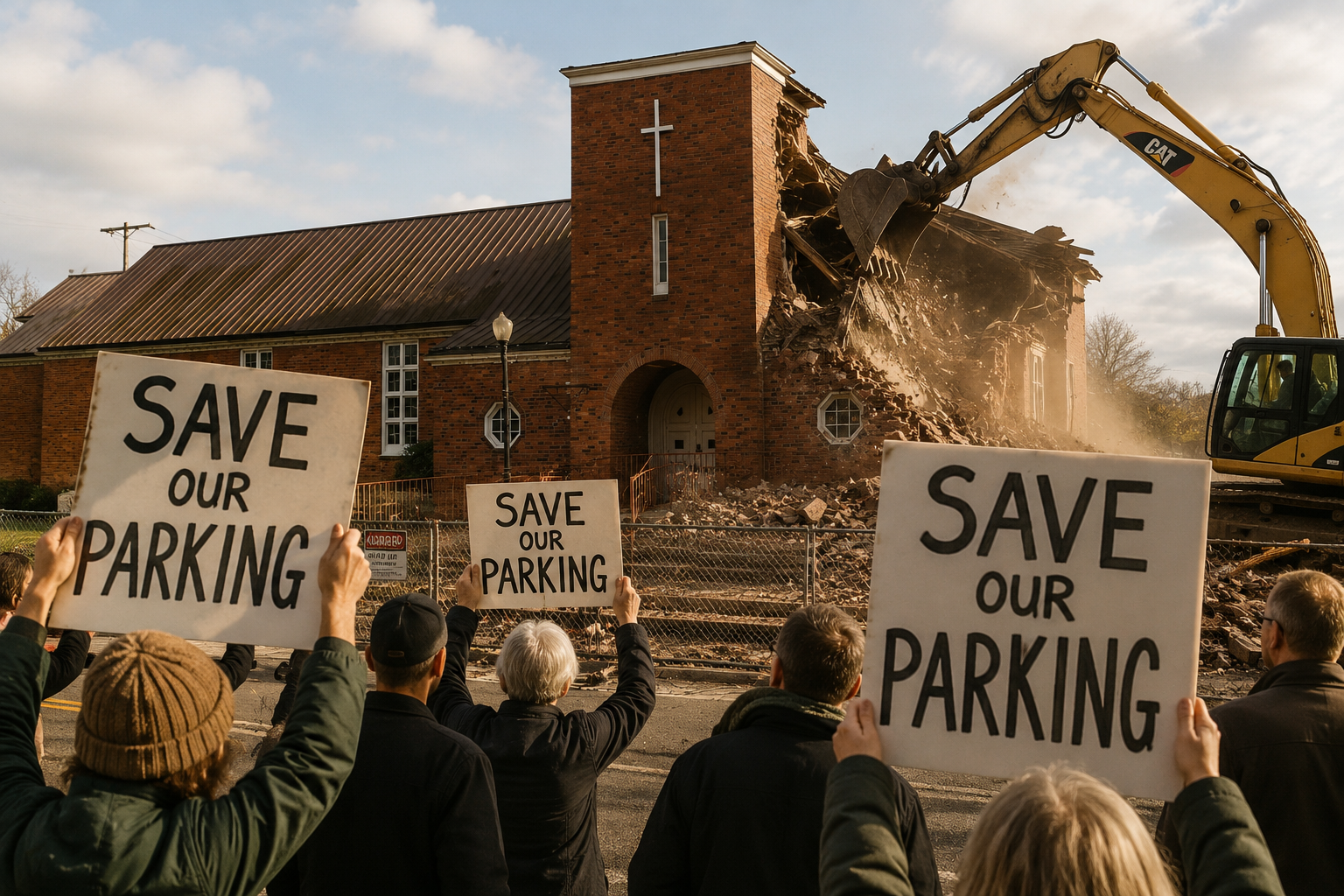
The irony is palpable
Save the Parking Lot!
The parking argument may be the funniest part of this entire saga.
Opponents have mourned the impending loss of 59 private parking spaces as though somebody were proposing to bulldoze Central Park.
It is worth noting that the parking spots are not guaranteed either - the parking lease can be revoked by the Church at any time, so the City isn’t guaranteed the parking anyways.
There is a particularly rich historical irony here: the parking lot exists because historic structures were previously demolished to create it. Now “historic preservation” is being invoked to preserve the asphalt created by destroying historic buildings.
You cannot write satire better than this.
And Oregon's housing rules make the parking crusade legally irrelevant anyway. Our testimony explains that the City's authority to impose off-street parking requirements on this affordable housing development is constrained by Oregon's CFEC rules, and that anticipated parking congestion cannot simply become a back-door reason to deny the project.
If downtown businesses believe another parking garage is essential to civilization, wonderful.
Buy some land.
Build one.
Maybe even convert one of the many City-owned surface lots to parking garages.
Charge for parking.
That is capitalism.
What they do not get to do is require an affordable housing development to sacrifice homes so neighboring property owners can continue enjoying convenient publicly subsidized storage for automobiles.
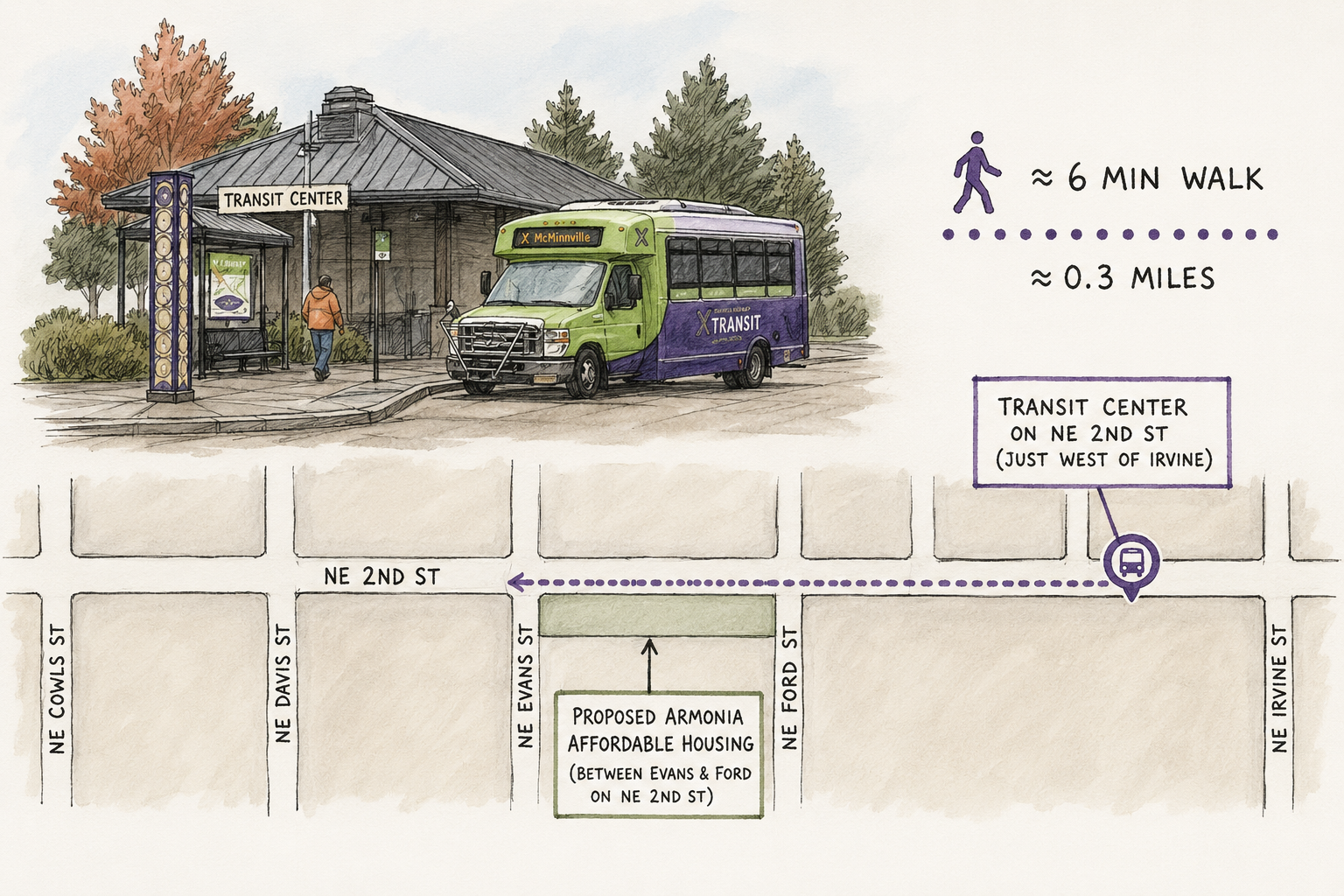
In addition, the transit center for the county is two blocks away - this is an incredible location for limited to no parking development.
The Historic Church Argument Is Dead Too
This part deserves special recognition for sheer procedural incompetence.
The appellants claim to care deeply about preservation.
There was, conveniently for the appellant, an actual historic demolition decision they could have appealed.
They didn't.
Our testimony identifies June 18, 2026 as the deadline to appeal HL 1-26, the Historic Demolition approval. That deadline passed without an appeal. The demolition decision therefore became final.
So the people now invoking historic preservation in an attempt to stop the replacement building failed to appeal the decision authorizing destruction of the historic building itself.
Bravo.
The church is coming down.
The preservation ship sailed while the parking-lot preservationists were apparently still looking for the dock.
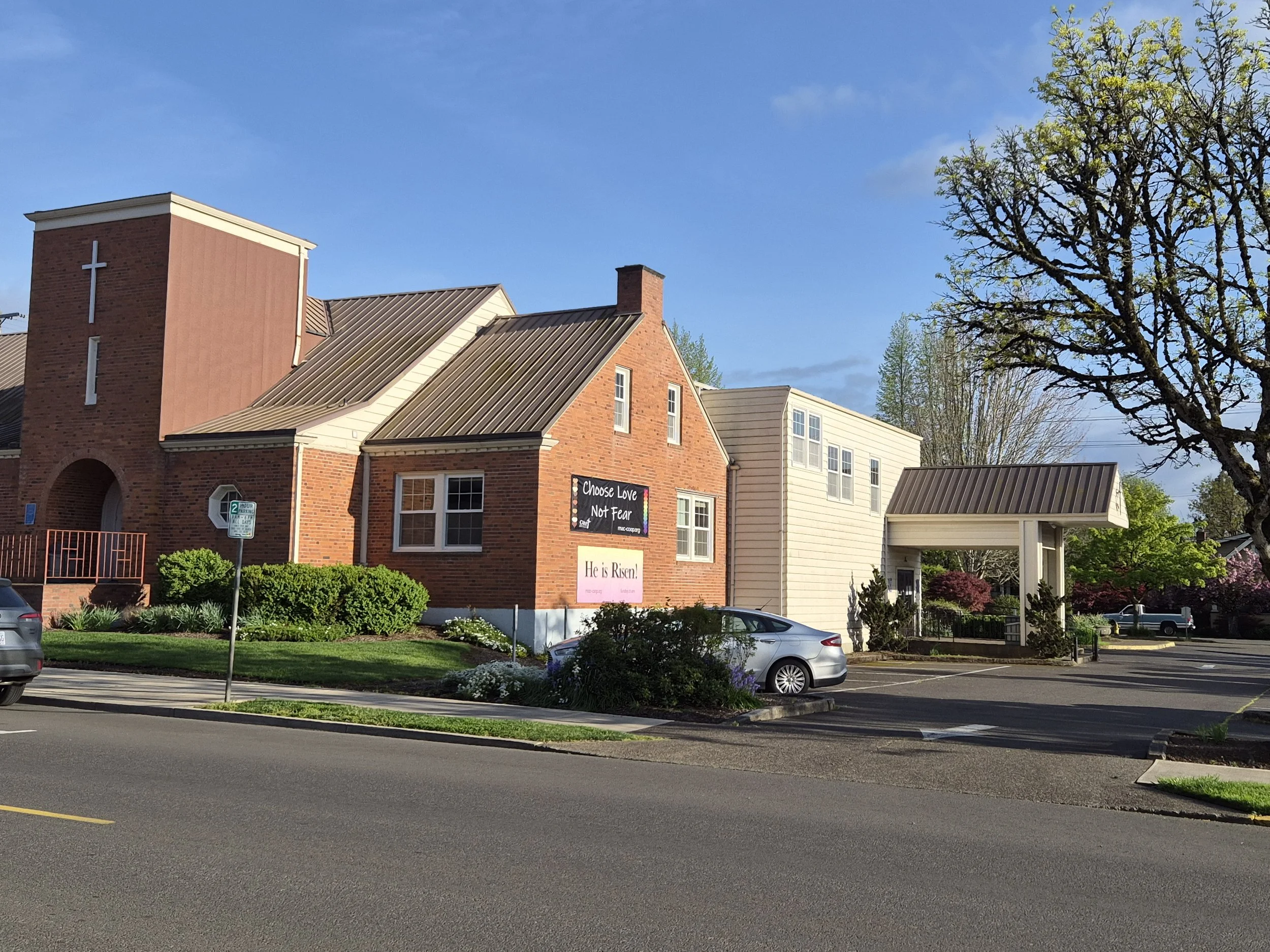
(The Historic Brick Church with addition in the background)
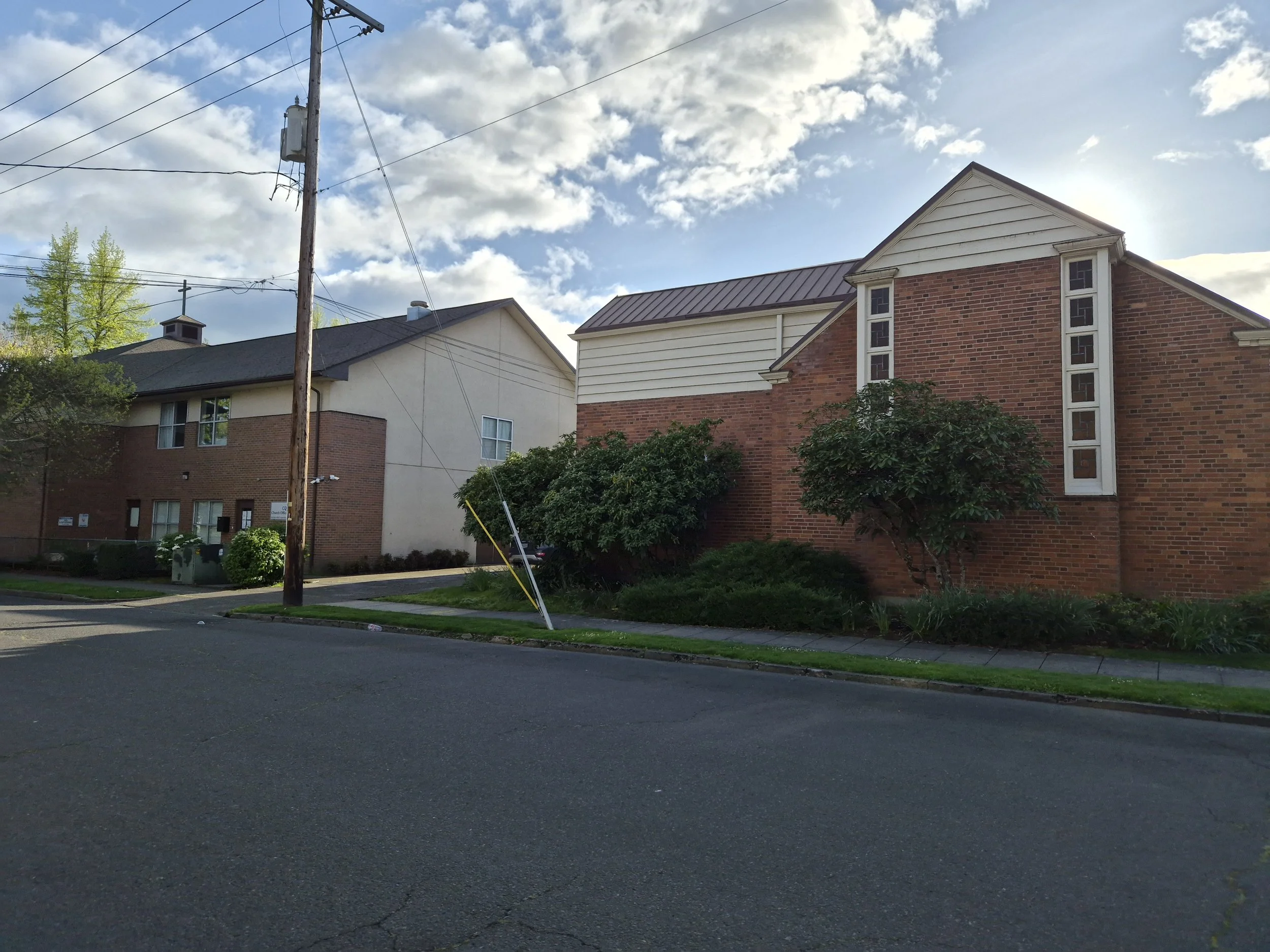
(Newer structure on the left & the Historic Church on the right)
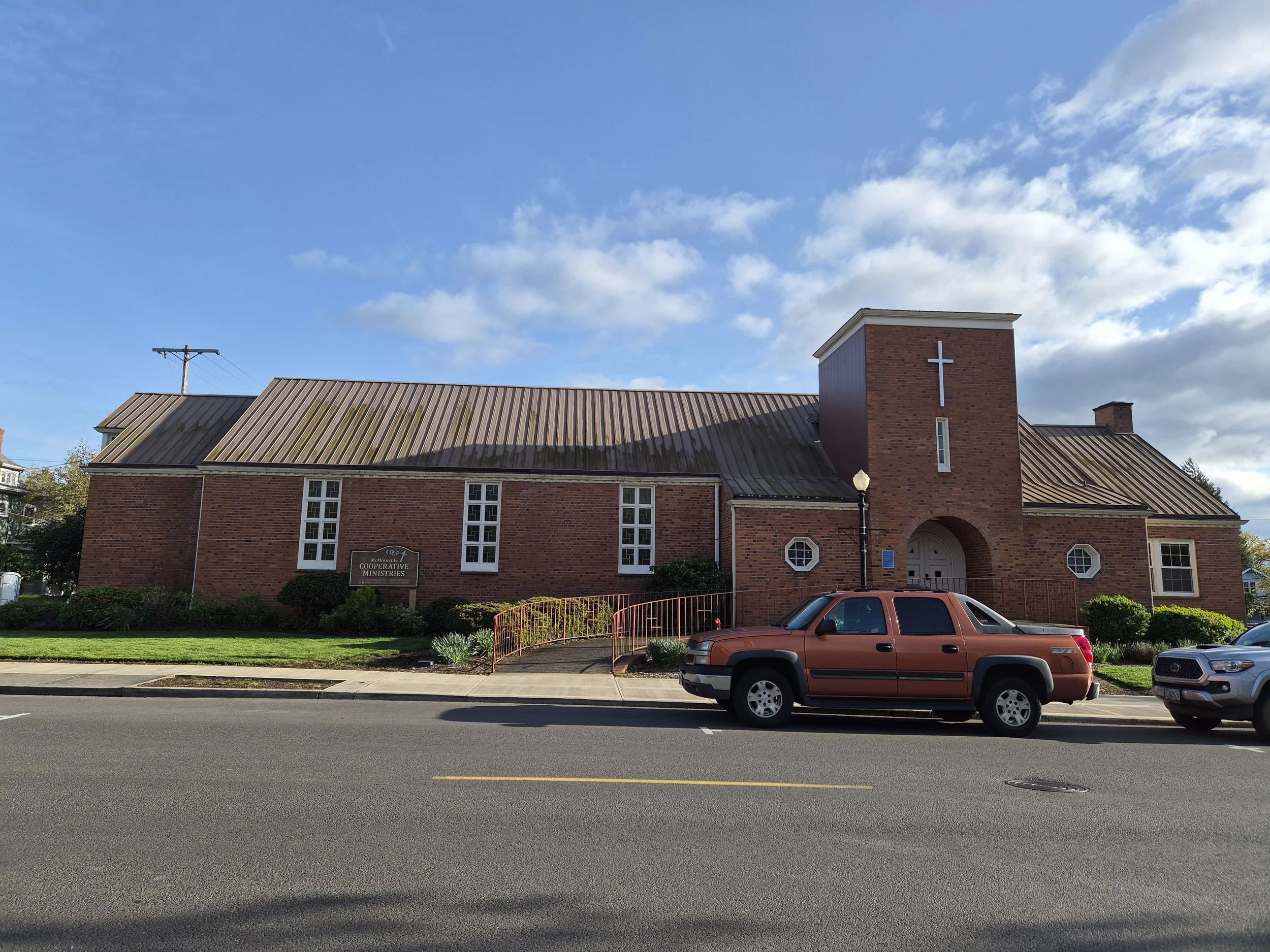
(The Historic Church facing 2nd Street McMinnville)
Then There's the Small Problem of Oregon Law
The fundamental problem for the appellants is not that their arguments are annoying.
It is that Oregon spent years changing state law specifically to prevent exactly this sort of local obstructionism from killing needed housing.
ORS 197.307 requires local governments to apply clear and objective standards to needed housing. The appeal's obsession with concepts such as “sense of place,” “historic character” and subjective massing preferences therefore runs directly into the state's restrictions on subjective housing criteria.
Then there is SB 1537.
The appellants have tried to turn the number and categorization of development adjustments into a mathematical escape hatch. But our August testimony identifies an even more basic problem: the challenged mandatory adjustments may only be appealed by the applicant, not by third parties trying to stop the development.
In other words, one of the centerpiece arguments of the appeal is not merely weak.
Our testimony's position is that the appellants are statutorily barred from making it.
And even their “too many waivers” theory does not accomplish what they imagine. As our testimony explains, SB 1537 establishes mandatory adjustment rights; it does not necessarily eliminate the City's independent authority under its own code to approve additional waivers.
The appellants have spent an extraordinary amount of effort constructing a legal trap out of provisions that either do not apply, cannot be invoked by them, or cannot legally accomplish the result they want.
That is impressive in its own way.
This Is NIMBYism With Better Stationery
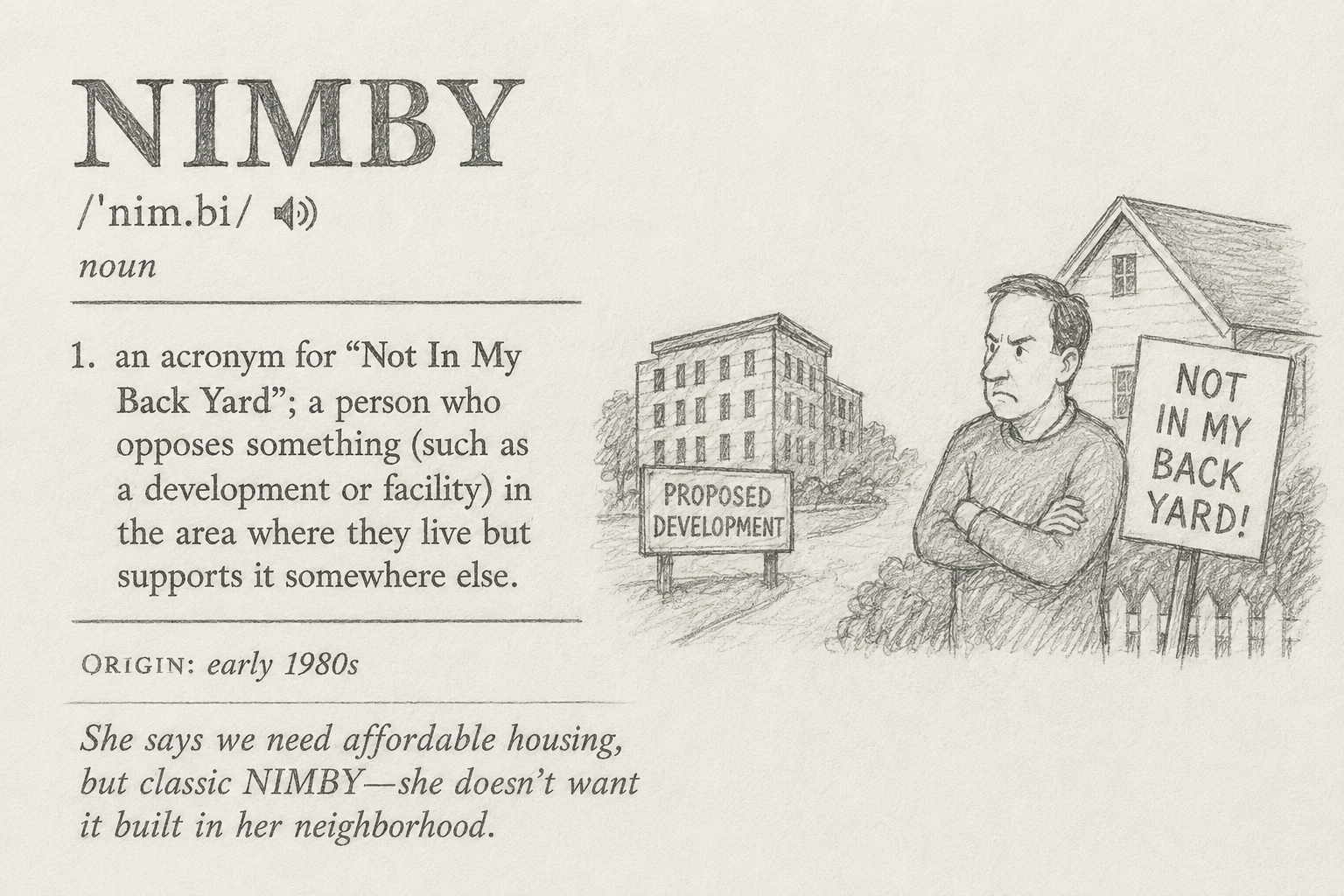
There is an old formula in American land-use politics.
Nobody opposes housing.
They support housing.
They simply believe this particular housing is too tall.
Or too dense.
Or inadequately parked.
Or inconsistent with character.
Or dangerous.
Or architecturally inappropriate.
Or insufficiently studied.
Or better suited somewhere else.
Repeat that process parcel by parcel for thirty years and then everyone looks around wondering why housing costs a fortune.
That is NIMBYism.
And when the project being subjected to this treatment is specifically affordable housing, the class implications cannot simply be wished away.
Supporting an effort whose practical consequence is excluding lower-income residents from downtown is still exclusionary even when nobody is impolite enough to put NO POOR PEOPLE on the appeal form.
When opposition is accompanied by remarks such as “those people won't shop here,” the racial and economic undertones become considerably harder to hide.
This is not merely an argument about land use anymore.
It is an argument about who is considered desirable enough to belong downtown.
Take It to LUBA. Please.
The City Council should deny AP 5-26.
Not because affordable housing deserves special treatment.
Because Oregon law governs the decision, and the appeal has to operate within that law whether the appellants like it or not.
Our August testimony characterizes the current appeal as essentially a placeholder for an eventual trip to the Land Use Board of Appeals, arguing that the appellants are assembling a record despite state-law barriers to their underlying theories.
If they want to appeal the City's denial to LUBA afterward, have at it.
LUBA is not a neighborhood Facebook group.
It does not decide whether somebody preferred the old parking arrangement.
It reviews land-use decisions against the law and the record.
And based on the legal defects identified in these two rounds of testimony, an appeal built around subjective aesthetics, parking impacts, historic-district protections for a property outside the district, a demolition decision nobody timely appealed and SB 1537 arguments the appellants may not even have statutory authority to bring faces an extraordinarily hostile legal landscape.
The City should not contort itself into an unlawful decision merely to save opponents the trouble of losing another appeal.
It is important to note that if anyone appeals this to LUBA, when they lose (and they will lose) they could be responsible for the other side’s legal fees. Those fees could be hundreds of thousands of dollars. If the City is stupid enough to side with the appeal, this will be taken to LUBA where the appellants will still lose and you can blame Jeb Bladine and the McClains for wasting tax payer money.
Deny AP 5-26.
Let them go to LUBA if they want.
Build the Damn Housing
McMinnville has now spent months discussing whether 72 affordable homes should be sacrificed because some established downtown interests prefer the status quo.
Enough.
The historic demolition decision is final.
The site is not inside the 3rd Street Historic District.
State law sharply limits subjective housing standards.
Parking is not a lawful veto.
And affordable housing is not required to provide surrounding businesses with a complimentary parking lot.
The remaining opposition increasingly looks less like preservation and more like what it has been all along:
A class fight dressed up as a land-use appeal.
People who genuinely support affordable housing eventually have to support affordable housing being built somewhere.
Including near them.
Including downtown.
Including without abundant parking.
Including for people who make less money than they do.
Including for families who may not look like them.
Anything else is just NIMBYism with better stationery.
The City Council should deny this legally threadbare appeal and let construction move forward.
Seventy-two homes are more valuable to McMinnville than fifty-nine parking spaces.
Build the damn housing.
The full testimony submissions opposing both appeals, including the complete legal and factual arguments summarized above, are available below.
The Full Public Record
Original testimony, demolition opposition, appeal opposition, and counter-testimony concerning the proposed redevelopment of the historic downtown church property at 544 NE 2nd Street.
Initial Opposition to Demolition of the Historic Methodist Church
Testimony supporting affordable housing while opposing the unnecessary demolition of the historic church at 544 NE 2nd Street.
Don’t Demo Downtown Mac: Alternatives Exist
Supplemental financial and code testimony examining preservation alternatives, construction costs, and the claimed financial necessity of demolishing the historic church.
Opposition to Appeal AP 4-26
Legal and procedural testimony opposing the first appeal of Downtown Design Review DDR 1-26 for the proposed affordable housing development.
Counter-Testimony to the McClain & Bladine Submissions
Point-by-point counter-testimony addressing the McClain appeal and supporting objections to the 72-unit affordable housing development.
Opposition to Appeal AP 5-26
Exhaustive rebuttal to the second appeal of DDR 1-26 before the McMinnville City Council, addressing the claims raised by McClain and Bladine.
Supplemental Opposition to Appeal AP 5-26
Supplemental testimony arguing that HB 4037 and ORS 197A.400 eliminated the appellants’ legal right to initiate AP 5-26 and that the appeal should be dismissed as unauthorized.

