
Don’t Demo Downtown Mac: Alternatives Exist
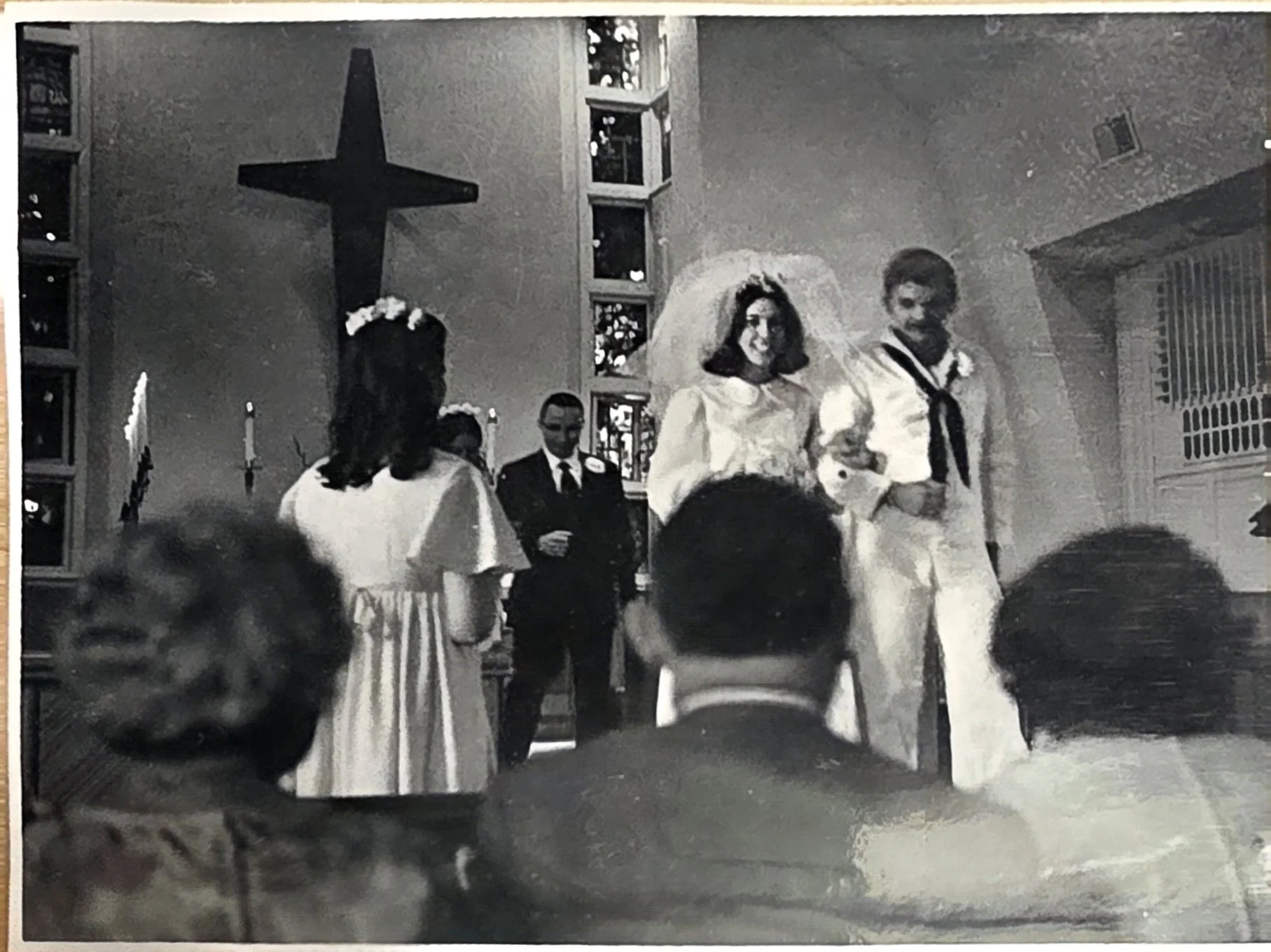
(Wedding of Bob Andrews & Margaret Millegan in 1970 - at the Historic Methodist Church in McMinnville, Oregon, showcasing the “Historic” cross & windows, as the architects for the proposed addition noted)
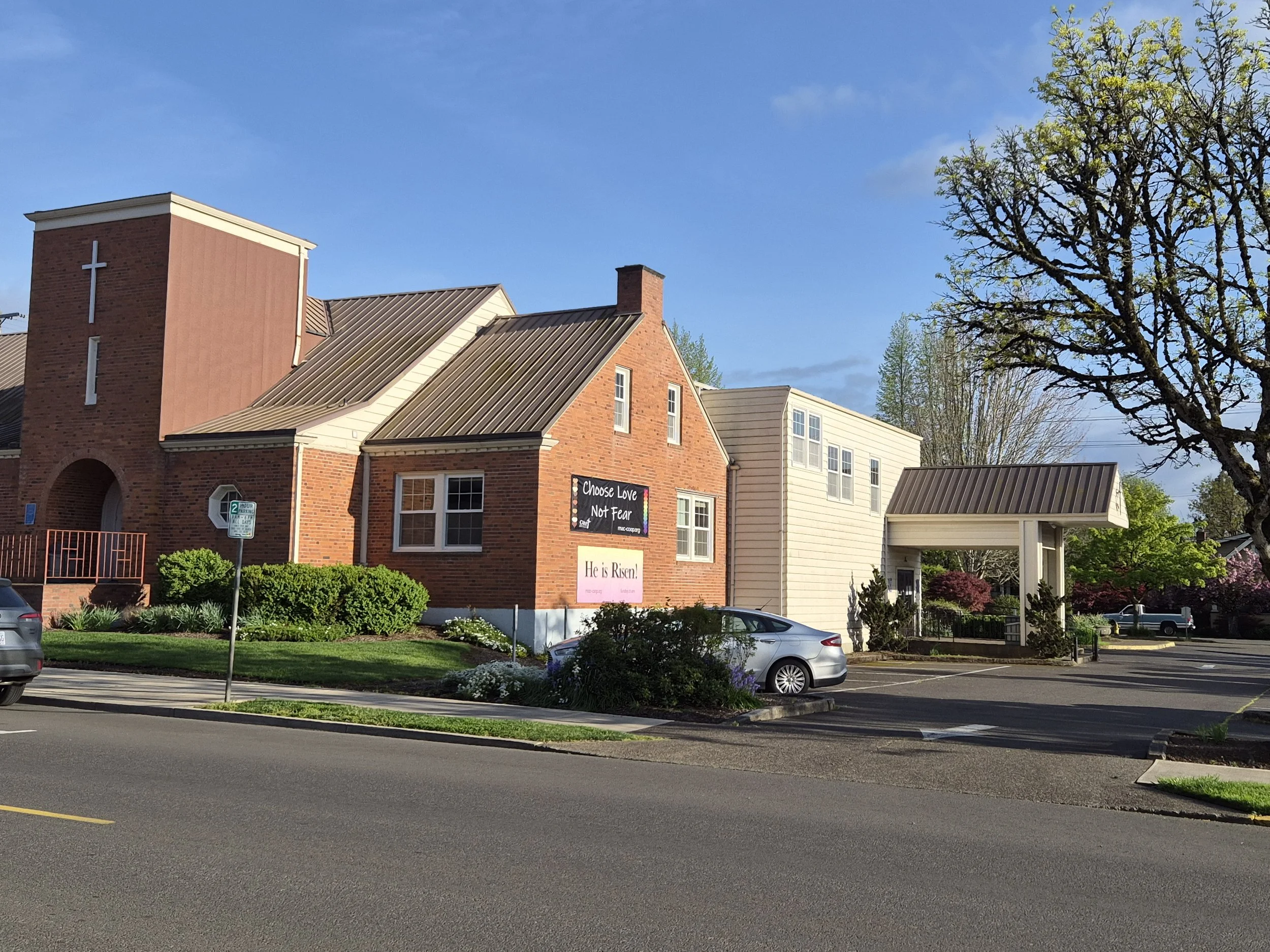
(The Historic Brick Church with addition in the background)
To: McMinnville Historic Landmarks Committee
City of McMinnville
Community Development Department
231 NE Fifth Street
McMinnville, OR 97128
From: Quinn Millegan, PO Box 1610, McMinnville, Oregon 97128 (624 NE 2nd St, McMinnville, Oregon 97128)
Date: April 24th, 2026
Re: HL 1-26 / DDR 1-26 — Opposition to Demolition Permit Application for Historic Structure (B852) at 544 NE 2nd Street (McMinnville Cooperative Ministries) — Supplemental Financial & Code Testimony
Members of the Committee,
I recently testified before this committee in opposition to the demolition permit for the historic church structure at 544 NE 2nd Street. It truly kills me to have to take that position. I am a staunch advocate for dense urban development; frankly, I wish the proposed affordable housing project was eight stories tall with absolutely zero parking. There is no need for more parking in McMinnville - multiple studies have shown a gross excess of available parking. However, achieving necessary density in our downtown core does not require the destruction of our historic fabric.
Fundamentally, this proposed project is exactly the type of dense development that fits perfectly within the fabric of a dense downtown. However, it is critical to recognize that neither McMinnville Municipal Code nor Oregon state law requires this density to be heavily oriented on the 2nd Street frontage at the expense of our historic architecture. The proposed unit count and massing could easily be placed anywhere on this block—most notably on the expansive, underutilized surface parking lot. The premise that this development must occupy the exact footprint of the historic church is a developer's preference, not a legal, zoning, or structural necessity.
During the hearing, committee member Knapp specifically asked for realistic cost estimates regarding the preservation of the church. Because the record remains open, I am submitting this itemized financial analysis—along with an assessment of the municipal code criteria—to demonstrate that the applicant’s narrative of "financial infeasibility" is fundamentally flawed.
Background & Qualifications
As a resident living directly next door to this proposed project, I want to reiterate that I wholeheartedly welcome new development to our neighborhood. However, my opposition to this demolition is rooted in deep practical and professional experience. My brother, Drew Millegan, and I run the only hedge fund in McMinnville. Prior to my current role as a venture capitalist and fund manager, I worked for a commercial and residential construction firm where I dealt with these exact types of renovations on a regular basis. Beyond that, our family constantly explores restoration and adaptive reuse project feasibility, having personally undertaken numerous renovation projects ourselves.
Furthermore, Drew and I lead a venture capital project here in Oregon where we successfully secured a destination resort approval on 2,800 acres through extensive public hearings—arguably the most difficult intensification-of-use land-use entitlement to obtain in state history. Through these ventures, we possess a plethora of costing experience on a commercial scale, including the specific adaptive reuse of historic structures that we plan to incorporate and move on-site. It is from this vantage point of deep financial, land-use, and construction expertise that I evaluate the applicant’s claims.
It is through this lens of professional experience that I evaluate the applicant’s claims against the specific criteria for demolition outlined in McMinnville Municipal Code (MMC) Section 17.65.050(B). The applicant's case relies heavily on the assertion that preserving the building causes an undue "financial hardship" to the owner under MMC 17.65.050(B)(7). However, manufactured infeasibility does not equal a true hardship, especially when a structurally sound building can be affordably maintained. Furthermore, under MMC 17.65.050(B)(8), the Committee is legally obligated to evaluate whether the historic resource may be preserved by "alternative means." As the following financial breakdown proves, completely reasonable alternatives exist on this property that satisfy the applicant's development goals, eliminate any legitimate claim of financial hardship, and preserve this legally recognized historic asset.
1. Scrutinizing Inflated Claims & The Phased "Ship of Theseus" Reality
The applicant, Bienestar, claims it would cost $2.7 million for deferred maintenance, plus $3.8 million to $5.0 million to adapt the building due to "change of occupancy" requirements.
Evaluating the financial viability of asset-heavy projects requires calling out when a scope of work is artificially inflated. The applicant has compiled estimates at the scale of essentially gutting and redoing everything to absurd, new-build standards simply because the building is old. Historic restoration does not necessitate a complete, single-phase, multi-million-dollar renovation. If the standard were to necessitate such an undertaking, all historic buildings in Downtown Mac would be demolished. Much like the Ship of Theseus, preservation is an iterative process where a building is responsibly maintained and updated component by component over its lifespan.
Furthermore, the inclusion of a multi-million-dollar seismic retrofit in their baseline is completely unnecessary for the building to simply continue its current operations. The fact that the structure is still standing—and that the building is actively used for meetings today—is empirical proof that it is not a hazmat-level hazard or a mandated tear-down. Not every item needs to be addressed at once and builders overestimate these costs when asked by developers for biased, off-the-cuff estimates. There is also no clear itemized list to understand their rationale.
2. The "Usable Phase" Cost Breakdown (Immediate Occupancy)
When modeling the actual, necessary costs to bring the 7,739 sq. ft. exterior footprint and 16,489 sq. ft. low-intensity interior volume to a safe, compliant "Usable Phase," the numbers drop drastically. This phase covers the bare minimum life-safety, ADA compliance, and envelope stabilization required to occupy the space legally.
Roof Sealing & Maintenance ($30,000 – $70,000): The building currently has a metal roof. Achieving a "usable phase" does not require a full tear-off. Costs are drastically minimized by tightening fasteners, repairing localized flashing, and applying commercial-grade sealants.
Targeted Window Sealing ($40,000 – $80,000): Strictly sealing leaks, re-glazing critical panes, and weatherproofing to stop further degradation.
Single ADA Bathroom Core ($50,000 – $75,000): Installing one gender-neutral, fully ADA-compliant commercial restroom to meet immediate occupancy codes.
Targeted Structural/Water Mitigation ($75,000 – $125,000): Localized mold remediation and repairing rotted decking exclusively where active water intrusion has occurred.
Essential Electrical & HVAC Upgrades ($150,000 – $250,000): Servicing existing boiler systems and replacing only critically outdated electrical panels and life-safety wiring.
Fire Alarms & Life Safety Egress ($80,000 – $120,000): Installing necessary fire alarm networks, emergency egress lighting, and basic sprinkler runs.
Basic Exterior & Sewer Connection ($50,000 – $80,000): Connecting to a commercial sewer main and implementing minor ADA exterior ramping.
Grand Total for "Usable Phase" Immediate Occupancy: $475,000 – $800,000
3. The "Full Restoration" Phase & Gap Financing
Even when looking beyond immediate occupancy to a complete, long-term "Full Restoration" phase, the applicant's $6.5M+ estimates are mathematically detached from reality. A full, comprehensive "white-box" restoration of the entire 16,489 sq. ft. interior and 7,739 sq. ft. footprint involves:
Comprehensive Roof & Envelope Restoration: $100,000 – $200,000 (Full metal roof refurbishment/recoating)
Complete Historic Window Restoration: $90,000 – $180,000
Multiple ADA Bathroom Cores: $100,000 – $150,000
Extensive Structural/Water Repair: $150,000 – $300,000
Full Systems Overhaul (HVAC, Electrical, Fire for 16.4k sq. ft.): $460,000 – $775,000
Site, Masonry, and Bell Tower Restoration: $60,000 – $130,000
Grand Total for "Full Restoration": $960,000 – $1,735,000
Crucially, this long-term full restoration phase does not need to be funded out-of-pocket on day one, and it is easily financed. The affordable housing complex will be paying the church significant ground lease payments. This provides a massive, reliable, long-term revenue stream that would seamlessly service the debt on a traditional commercial loan to cover these full restoration costs.
4. Capital Allocation: Expanding the New vs. Preserving the Historic
The spatial and financial priorities of this site plan are entirely misaligned. The applicant proposes building a 935-square-foot addition to the newer 1990s church building on the southeast corner of the lot. However, the historic church boasts nearly double the interior space of the newer building (16,489 sq. ft. compared to roughly 7,000 sq. ft.).
Instead of undertaking expensive new construction to expand the 1990s footprint, the church's existing kitchen equipment can easily be moved into the massive, existing square footage of the historic structure.
At current standard commercial construction rates of roughly $350 to $400 per square foot, Bienestar will spend an estimated $327,250 to $374,000 just to construct this non-historic addition. They are actively choosing to allocate nearly $400,000 toward expanding a newer, smaller structure while claiming they cannot afford the $475,000 Phase 1 stabilization required to save a recognized historic asset. If Bienestar simply reallocates the funds already allocated for this unnecessary addition directly to the restoration of the historic church, the financial gap to achieve immediate occupancy vanishes.
This voluntary misallocation of capital completely invalidates the applicant's argument of "financial hardship" under MMC 17.65.050(B)(7). An applicant cannot logically or legally claim that preserving a historic resource is an insurmountable financial burden while simultaneously choosing to spend roughly $400,000 on brand-new, non-essential construction just a few feet away. Moreover, simply reallocating those exact funds to the historic church perfectly satisfies the requirement of MMC 17.65.050(B)(8) to preserve the resource by "alternative means." Utilizing existing, allocated capital to restore the historic footprint instead of expanding the 1990s building is a direct, fully funded alternative that achieves immediate occupancy and strictly prevents the demolition from meeting the city's approval criteria.
5. The Acknowledgement of Historic Value & The Hypocrisy of Salvage It is also critical to point out the glaring hypocrisy in the applicant’s treatment of this historic resource. The city has already definitively identified this building as a historic asset. Even the applicant implicitly acknowledges this value: the architect for the proposed new addition has stated their intention to salvage and incorporate the "historic windows" and other architectural elements from the historic church into their new building.
If these windows and materials are structurally sound and culturally significant enough to serve as aesthetic centerpieces for a new development, then the building itself is inherently worthy—and capable—of preservation. Stripping a recognized historic landmark for parts to artificially "historicize" a new build is not preservation; it is architectural vandalism. The historic status of the building is an established fact, not a debate for this hearing.
6. Institutional Solvency & Alternative Asset Utilization It is imperative to address the holistic financial reality of the applicant's partner, the McMinnville Cooperative Ministries. The narrative that the church is a cash-strapped organization backed into a financial corner is highly misleading. The church owns additional land within the city, providing multiple viable avenues that do not require destroying a historic landmark:
Selling the Entire Downtown Lot: The church holds prime downtown real estate. If they wish to build a new, modern facility, they could easily sell this entire lot to an alternative private developer for a significant premium and utilize those funds to develop a brand-new facility on their other parcel. They could still sell or lease the block for exclusively affordable housing.
Selling the Developable Footprint: If the congregation wishes to remain in their historic downtown home, they can simply partition and sell the highly developable portions of their current lot (the parking lot and the 1990s building footprint). The proceeds from selling this prime land to a housing developer would effortlessly fund payments to finance the historic church's renovations.
Adaptive Reuse as Community Space: If the church opts to vacate the property entirely, the historic structure does not need to be structurally gutted or partitioned into apartments. Its wide-open, low-intensity layout is perfectly suited for immediate adaptive reuse as a community center or resident gathering space for the affordable housing complex itself, requiring virtually no major interior alterations to effectively serve the new community. As part of the affordable housing complex it would still qualify for adjustment waivers.
7. Historic Designation and Federal Grants
By removing the non-historic addition from the historic church, the property qualifies as a listed historic asset. This opens up entirely new capital stacks that the current proposal ignores:
Federal Funding & Tax Incentives: National Register listing opens the door to the Federal Historic Preservation Tax Incentives program, which provides a 20% tax credit for rehabilitation. The project could also pursue Federal Historic Preservation Fund (HPF) grants.
State and Heritage Grants: The property becomes eligible for capital from the Oregon State Historic Preservation Office (SHPO), including Preserving Oregon Grants and Oregon Heritage Grants.
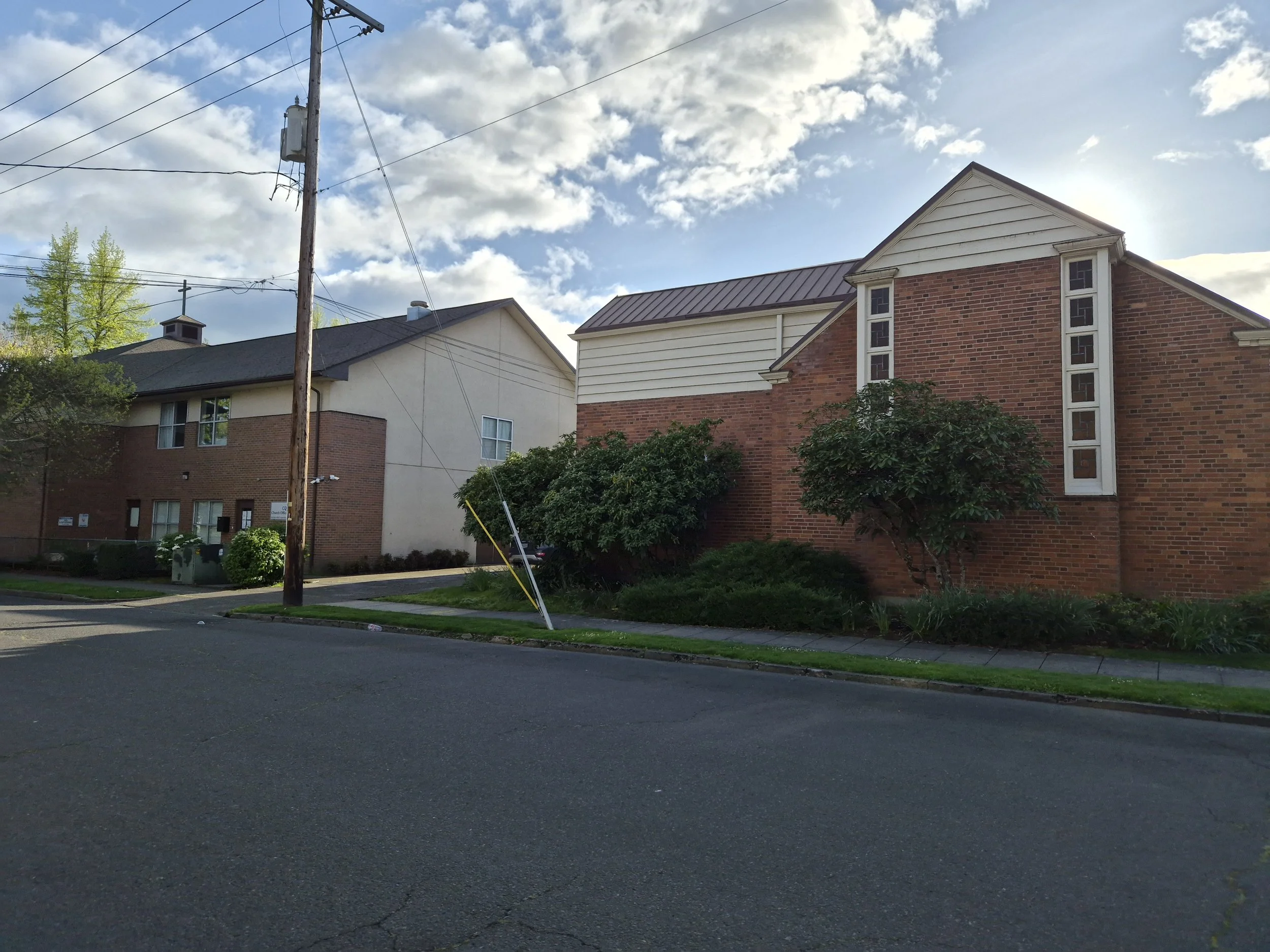
(Newer structure on the left & the Historic Church on the right)
8. Failure to Meet Demolition Criteria: The Existence of Reasonable Alternatives
Under McMinnville Municipal Code Section 17.65.050(B), the Historic Landmarks Committee is required to evaluate the "reasonableness of the proposed action" and whether the resource can be preserved by "alternative means." The applicant’s current proposal fails this fundamental test because a completely reasonable, legally sound alternative exists right on the property.
Because the city has already identified this as a historic asset, the only question before this Committee is whether there is an ability to use the existing building and if reasonable alternatives to demolition exist. The answer to both is an unequivocal yes.
Demolishing the historic church is not a structural or financial necessity; it is simply being treated as the path of perceived least resistance. The developers can achieve their exact unit-count and density goals or more by utilizing the surface parking lot or demolishing the non-historic 1990s building instead. Alternatively, under Oregon state law, the developers can request a waiver for zero parking minimums for the new apartments, building entirely on the existing parking lot. The Church is replete with options and has been blessed with both an entire city block and the flexible zoning.
Approving a demolition permit when a viable, undeveloped footprint sits adjacent to the building sets a highly dangerous precedent. If this Committee accepts the applicant's logic, it signals to future developers that they can purchase any historic property, generate inflated estimates to feign financial hardship, and bulldoze our cultural heritage simply because it is easier than reconfiguring a site plan. There are multiple alternatives for the Church to preserve the building and achieve their goals without an undue financial burden.
9. Strategic Risk: Handing a Discretionary Lever to Bad-Faith or Reactionary Opposition
It is also critical to look at the broader strategic reality of this land-use application. Pursuing the demolition of a recognized historic asset is a massive, unforced error that jeopardizes the entire affordable housing project. Historic demolition is a highly discretionary land-use action, which inherently invites prolonged appeals to the City Council and the state Land Use Board of Appeals (LUBA). Even if the applicant succeeds in these initial hearings, they are handing a massive legal lever to hostile and unrepresentative local opposition. Neighbors who are possessed by misguided parking concerns, a general resistance to change, or quiet prejudices against living next to affordable housing will not hesitate to weaponize historic preservation statutes to stall, bleed out, and ultimately kill this otherwise highly beneficial and needed development. By pivoting to the reasonable alternatives—such as building on the existing parking lot or replacing the non-historic 1990s building—the developer completely removes this discretionary lever, outmaneuvers bad-faith opposition, and guarantees that this critical affordable housing actually gets built.
This is reminiscent of the failure of the Gwendolyn Hotel (3rd & Ford Historic O’Dell Building), which only failed because they chose (partly at the necessity of an unreasonable seller) to attempt to demolish a historic structure when reasonable alternatives existed. While the development there was also much needed, the precedent of demolishing a key part of our historic downtown was too great to allow. Had they approached the development differently from the beginning, that too would have been developed (call us first next time).
Concluding recommendation:
I urge the Committee to reconsider the applicant's inflated financial claims, deny the demolition request based on the failure to meet Section 17.65.050(B) criteria, and require a site plan that delivers the housing McMinnville needs without sacrificing the historic assets that anchor our downtown.
Sincerely,
Quinn Millegan
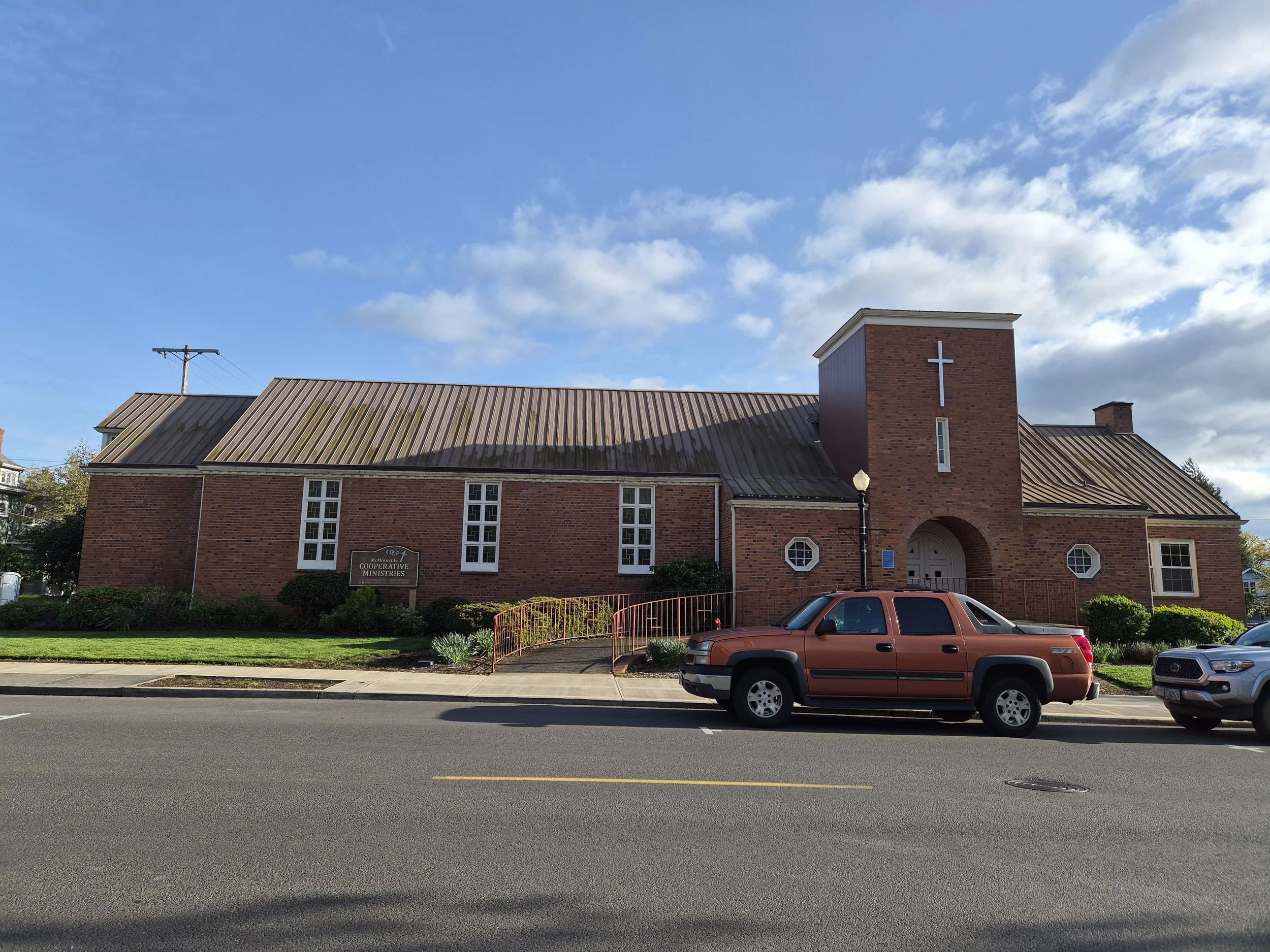
(The Historic Church facing 2nd Street McMinnville)

